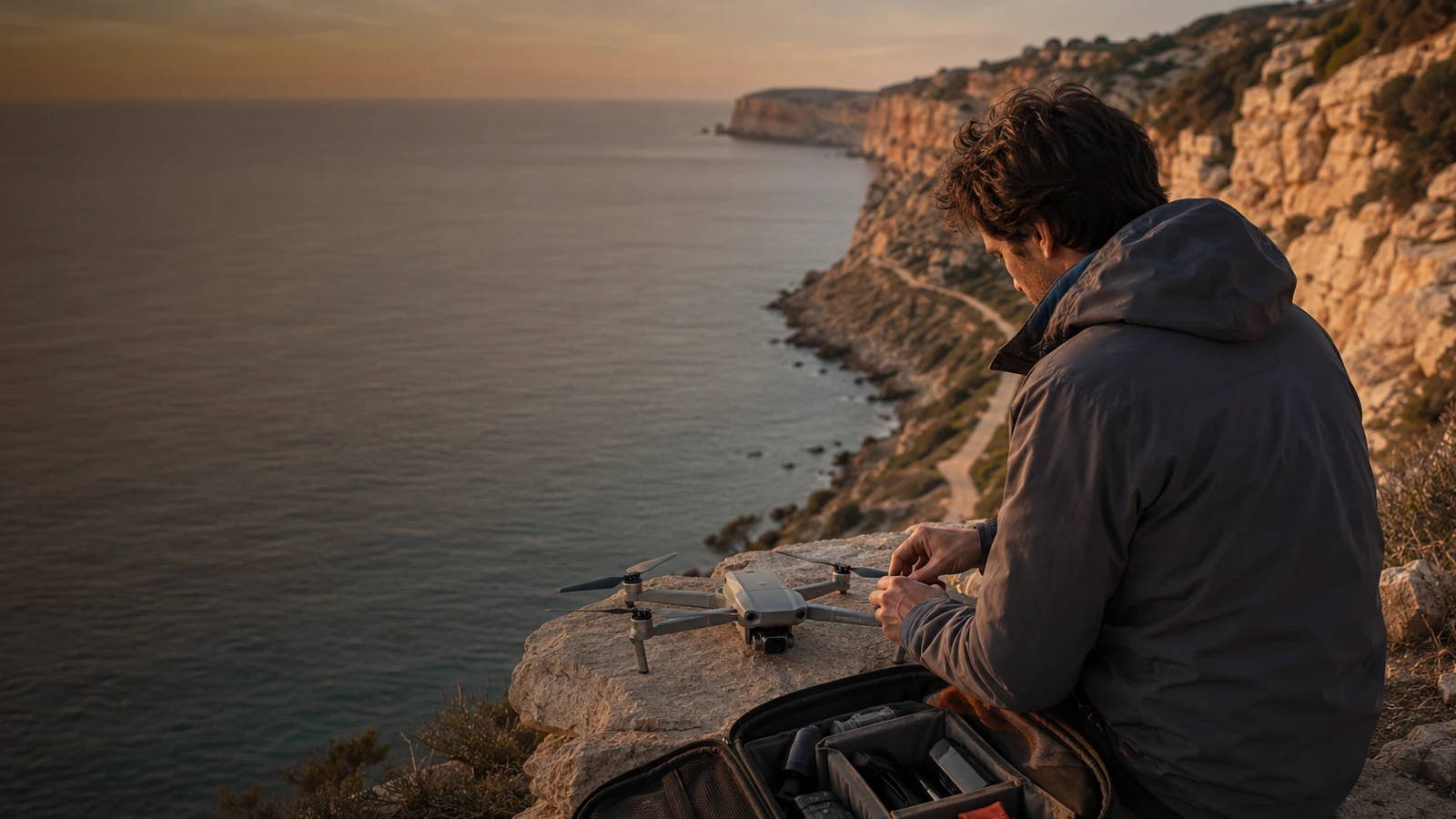
Start with the wind back
Going with a tailwind can hide the energy cost of returning. Set a conservative departure direction and return before the battery turns flight into an emergency.
Protect equipment and area
Fine sand, saltpeter and gusts on cliffs affect propellers, motors and gimbal. Use a clean surface, avoid takeoffs near people, and check the equipment when finished.
Light is also planned
Schedule your tour before the best light. Arriving at dawn without a proven zone or rehearsed movements wastes the most valuable window.
DroneBase Checklist
This guide is only useful if it results in a verifiable decision. Before closing the purchase, preparing the equipment or taking off, make sure you can confirm each of these points with the manufacturer's documentation, the actual state of the material and the specific conditions of the operation.
- Return wind.
- Gusts next to the relief.
- Sand and saltpeter.
- People in the area.
- Light available.
- Landing alternative.
If one of the data is missing or depends on the variant, treat it as pending. Don't replace a missing specification with a trade promise or a zone check with an old capture. The correct decision is the one that remains valid when the pack, environment or flight plan changes.
What should you be able to answer when you finish?
Which information is official and which is only indicative? What condition can change the result? What check should you repeat just before using the drone? If the three answers are clear, the guide has fulfilled its function: reducing uncertainty without pretending that all flights and all products are the same.
The DroneBase RuleIf a decision depends on the specific location, the marking of the drone or the type of operation, always confirm the case with CAA and CAA airspace alerting guidance before taking off.